
 HE
HE  EN
EN  DE
DE  EL
EL  IT
IT  FR
FR  ES
ES Chatbot for Tourism and Hotels: How a Small Bot Enhances the Guest Experience
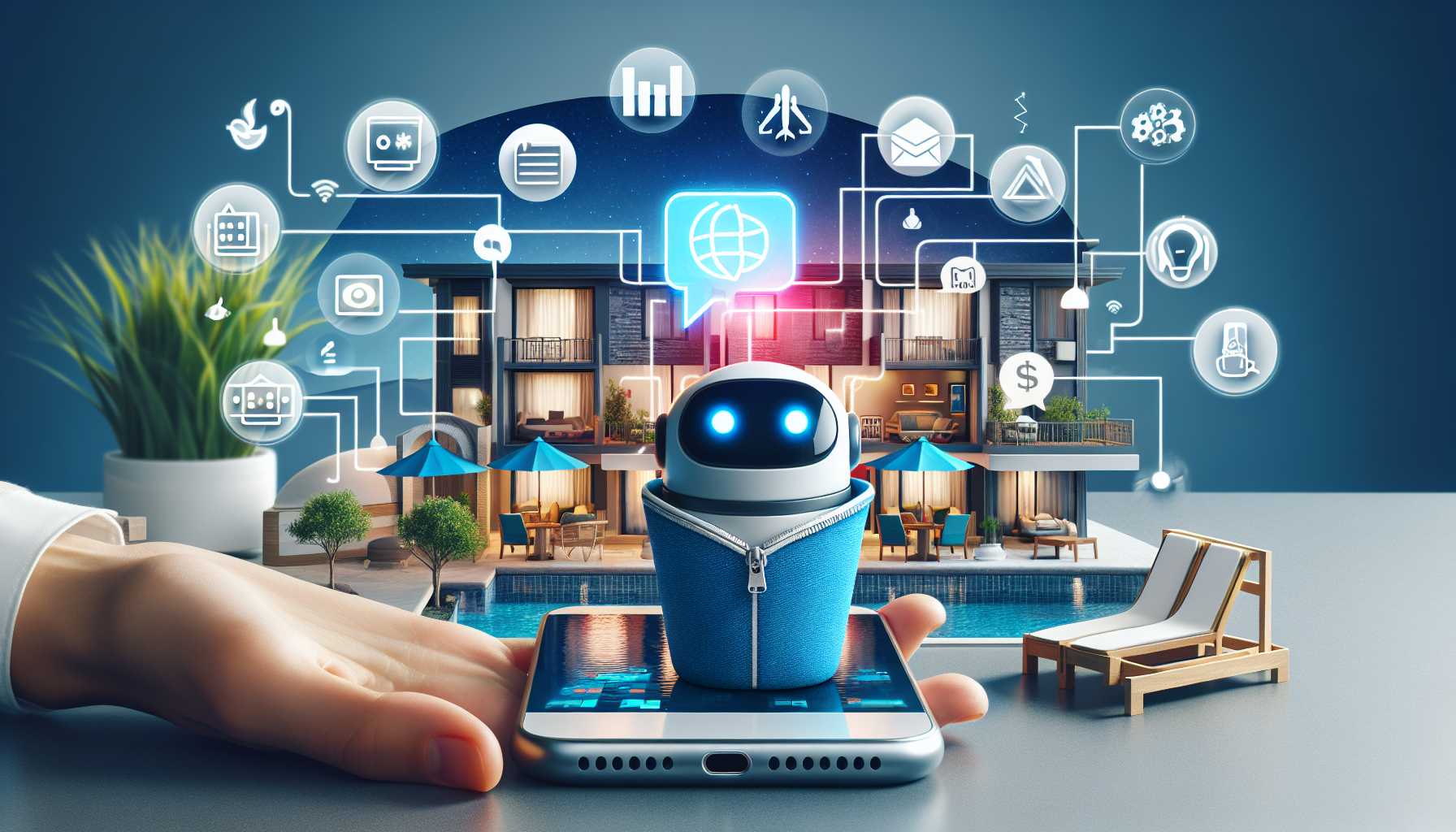
In recent years, I've had the chance to talk with quite a few hotel managers, in Israel and abroad. In almost every conversation, at some point, the same deep sigh appears: "Guests today expect everything, immediately, and on WhatsApp." It's funny, but also accurate. On one hand – guests want personal, human treatment, almost like from family. On the other hand – they don't really want to stand in line at the front desk, wait on hold for the reservation center, or explain for the third time that they have a gluten allergy. This is where the chatbot comes in.
The chatbot, which in a few years we'll already forget how we even called it a "bot", has become a key tool in the tourism and hospitality industry. No longer a technological gimmick on a shiny website, but a quiet service layer – sometimes invisible – that connects between the hotel's marketing promise and the reality on the ground. The question is not whether you need a chatbot, but how to build one that provides a real experience, before, during, and after the stay.
Before Check-in: Chatbot as the World's Most Patient "Salesperson"
Let's go back to the beginning for a moment: the search stage. Your potential guest sits on the couch in the evening, TV on in the background, types in Google "hotel with heated pool in the north" and browses through dozens of websites. Most of them look the same. Nice pictures, big promises, small prices in small print. What separates "I'm booking now" from "forget it, we'll check tomorrow" is sometimes something very small – a quick answer to a simple question.
The chatbot enters exactly at this point. The moment when the guest asks themselves: "Is there a family room suitable for three children?", "Do you accept dogs?", "What's the distance to the beach?". Instead of a contact form, email, or phone that no one really wants to answer at 10:30 PM, a smart chatbot can answer in real time, in Hebrew, English, or any relevant language.
Answer Machine or Personal Advisor?
A basic chatbot for tourism knows how to answer common questions: check-in and check-out times, cancellation policy, parking, breakfast, possibility to bring a dog, baby bed. But an advanced chatbot for hotels doesn't settle for that. It knows how to ask back: when are you planning to arrive, with whom, what's important to you – quiet, proximity to attractions, spa? The more it asks (without being annoying), the more it can offer a more accurate stay experience.
And it doesn't end with answering. A chatbot connected to the hotel's reservation system can, seemingly, accompany the guest until the moment they click "confirm reservation". It can display real availability, factor in promotions, suggest room upgrades or a romantic dinner without the guest feeling like they're being "pushed" something, but more like a smart recommendation from a friend.
The Transition from Information to Experience
The turning point is when the chatbot stops being a "question and answer machine" and becomes part of the brand experience. A boutique hotel in Tel Aviv, for example, can define its chatbot as a character with personality: a bit of humor, a bit of "local" recommendations, human tone. Such a chatbot for urban tourism doesn't just answer how much a mid-week night costs, but also suggests a bar worth visiting near the hotel, a running route on the promenade, or a café with beautiful sunsets.
If done right, the guest already at the pre-booking stage feels they "know" the place. That they're not just looking at a marketing presentation, but talking with an entity that represents the hotel. This might sound a bit too romantic for a bot, but in an industry where the difference between clicking to another website and an actual booking is a few seconds – the chatbot becomes a critical tool.
During the Stay: Chatbot as a Private Reception Desk in Your Pocket
The moment the guest has already arrived at the hotel, the real test takes place. Instagram photos are nice, but what matters is how reality feels when they try to find the room, understand where to get pool towels, or request an extra pillow.
Here, a chatbot for hotels can be all the difference between "nice hotel" and "wow service experience". Mainly because it's available, doesn't judge, and doesn't get tired of repeating questions.
24/7 Service Without Overloading the Staff
In many hotels, especially in Israel, there's a classic gap between morning and evening. In the morning – enough staff, full reception, phones answered. In the evening or night – reduced shift, load, and a line at reception for every little thing. A chatbot connected to the hotel's systems (or at least to defined workflows) can take on a huge part of this load: from providing basic information to opening a call for housekeeping or technician, without the guest having to stand in line.
A small example: a guest returns from a wedding at 2 AM and discovered there aren't enough blankets in the room. Instead of calling reception, waiting, explaining, making sure they understood the room number, they simply write to the hotel's WhatsApp chatbot: "need an extra blanket for room 305". The chatbot identifies the details from the reservation, opens a call, and updates: "Request forwarded to night staff, blanket on the way to you". That's service. And it's also dramatic relief for the staff, who don't need to answer every basic question on the phone.
Small Integration, Big Effect
The moment you connect the chatbot to internal systems – PMS, CRM, task management system – a whole world opens up. You can easily check if the room is already ready for early check-in, open an account with "digital signature" through chat even before arrival, or allow booking a table at the hotel restaurant in one message. Anyone familiar with Israeli WhatsApp culture knows – if you can do something in a message, it will happen more than through a form.
Therefore, a chatbot for hotels in Israel, to be truly effective, must speak WhatsApp, Messenger, and not just "I'm a chat on the website, come click on me". The difference between a bot waiting on a website and a bot that accompanies the guest from booking until departure is actually the difference between a gimmick and a service platform.
The Chatbot as "Gatekeeper" of the Service Experience
Another interesting thing: a chatbot can serve as a radar for identifying problems in real time. When guests write again and again "the AC doesn't work", "there's noise in the hallway", "room delay", a smart system can identify patterns and alert the manager on duty before tension rises. In other words: the chatbot doesn't just respond, it also predicts.
A smart hotel manager can enter the chatbot management system in the middle of a busy day, and not just see "how many open inquiries", but also understand what they're talking about, where the real bottleneck is, and which guests might be frustrated. This is a kind of dashboard sensitive to guests' mood – data worth gold in a world where one bad review on Booking or Google can cost a lot of money.
After Check-out: Chatbot That Doesn't Forget the Guest
Many hotels invest a lot in the stay experience itself, and rightfully so, but forget that the relationship with the guest doesn't end when leaving the room. A few days later, when routine returns, this is the time when the guest decides if they're coming back, if they recommend to friends, and mainly – if they bother to leave a review.
Smooth Transition from Service to Retention
A chatbot for tourism doesn't need to disappear the moment the guest gets in the taxi to the airport. It can send a gentle message: "We enjoyed hosting you, we'd love to know how the experience was", offer a short link to leave feedback, or even ask one open question: "Something you'd change?". These responses, even if not all positive, are operational and marketing gold.
After another two weeks, the chatbot can – if configured correctly – remind about a promotion for returning guests, send an update about opening a new wing, or offer a birthday benefit. All this, as long as you maintain a tone that respects the guest and doesn't flood them with unnecessary messages. This is a delicate art: on one hand automation, on the other humanity. A smart chatbot knows how to find the balance.
What Happens When You Combine Chatbot with Smart CRM
When the chatbot system is connected to the hotel's CRM, the story becomes even more interesting. You can identify returning guests, offer them a regular room in advance, remember preferences (high floor, double bed, extra pillows) and make their entire next booking experience a matter of two messages.
This is no longer automation for its own sake, but a feeling of familiarity. And the guest, even if they know intellectually it's a machine, feels that someone there "remembers them". In a competitive industry like tourism – this is exactly the kind of difference that creates real loyalty, not just "it was cheap so we booked".
Chatbot for Tourism in Israel: Between WhatsApp and Google Reviews
You can't talk about chatbots for hotels in Israel without referring to the local service culture. The Israeli guest, as we know well, is a combination of a demanding customer, very direct, and not always patient. They also expect an immediate response on WhatsApp, at any hour, including Friday afternoon and second holiday.
Real Conversations, Not Robotic Language
When building a chatbot for tourism in the Israeli market, you can't settle for generic texts in translated English. You need language that feels natural: "hi", "sure", "just checking", human way of speaking. Not "we are verifying your details", but "checking for you in a moment". These small nuances make the difference between an annoying bot and a pleasant bot.
In addition, Israelis tend to mix languages – "late check-out", "all inclusive", "is there a shuttle?". A smart chatbot needs to understand spoken Hebrew, slang, spelling mistakes. People don't write to hotels like to a language teacher, and certainly not in the middle of a trip.
Fast Response as Standard, Not Bonus
Another local feature: impatience. If a chatbot takes 10 seconds to answer, the guest might already move to a competitor. Yes, it sounds extreme, but in a world where booking is done from a combination of quick price comparison and button click – patience is short, and the opportunity is one-time.
Because of this, a chatbot for tourism in Israel must be not just "smart", but also fast, backed by good infrastructure, and in most cases – with the option to transfer a conversation to a human representative at the click of a button. Not everything must be solved automatically. Sometimes, precisely the smooth transition from virtual to real representative, when needed, is what creates trust.
How Do You Even Approach Building a Chatbot for Hotels?
At this stage, many hotel and accommodation managers ask the same question: "where do we start?". There's no shortage of chatbot platforms, no shortage of "ready" solutions, but in practice – a good chatbot for tourism is built gradually, around the reality of the specific hotel and not according to a generic template.
Start from Questions That Repeat
One of the simple, almost trivial steps, is to open the "information and reservations" email inbox, extract a report from recent phone conversations, and start sorting: what repeats again and again? Check-in hours, cancellation policy, pool, parking, breakfast, possibility to bring a dog, baby bed. From here you can form the chatbot's first knowledge base.
A chatbot for hotels doesn't have to know everything on day one. Better it knows how to answer excellently on 20–30 central topics, than "approximately" on 300. Over time, monitor new questions that come up in chat, add answers, improve phrasing. This is a living system, not a presentation that stays static.
Define Where Humanity Enters
A no less important point: decide explicitly, already in the planning stage, where the chatbot ends and the human begins. Do special requests (allergies, events, safety issues) always go to a human representative? Do complaints with certain words ("not satisfied", "disappointed", "problematic") trigger an alert? These are decisions that separate between a chatbot experienced as a real service tool, and one that causes frustration.
Measurement, Adjustment, and Not Just "We Implemented and Finished"
The common mistake is to treat a chatbot as an IT project: we set up, implemented, finished. In practice, a chatbot for tourism is closer to a human factor in the team – needs to be trained, taught, updated. Did the breakfast menu change? Are there pool renovations? Did a new restaurant open? All of this needs to enter into its knowledge.
Professionally, it's very worth measuring: how many inquiries were resolved without human touch, where people "got stuck" in chat, at what stage they requested a human representative. From this data you can understand where to improve, and no less important – where not to try to automate too much.
Questions and Answers About Chatbots for Tourism and Hotels
Does a Chatbot Replace the Human Staff at the Hotel?
No, and it also shouldn't. A chatbot for hotels is meant to reduce load from staff, handle repeating and simple questions, and allow service people to focus on things that really require listening, judgment, and personal attention. In other words – the chatbot doesn't replace the smile, it frees up time for it.
How Long Does It Take to Implement an Active Chatbot in a Hotel?
This depends on the level of complexity. A basic chatbot, that answers common questions on the website, can go live within a few weeks. An advanced system, with integration to PMS, CRM and reservation systems, usually requires a few months of gradual work, testing, and field adjustment. In any case, it's worth starting small and expanding gradually.
What About Languages? Foreign Tourists, Israelis, Russian, French...
Most chatbot solutions for tourism today support multiple languages, but quality varies. For a hotel in Israel that also hosts incoming tourism, it's recommended to at least ensure Hebrew and English at a good level, and as needed add other major languages according to guest composition. You can start with one language, and measure demand for additional languages according to data.
Is a Chatbot Suitable Only for Large Hotels?
Absolutely not. A chatbot for guesthouses, B&Bs, hostels – can be no less significant, maybe even more. Small businesses often struggle to answer phones and WhatsApp at all hours of the day, and smart automation can create a sense of availability that wasn't possible before. The difference is in scope and complexity, not in the basic need.
How Much Does It Cost, and Is It Even Worth It?
The cost varies by provider, conversation volume, and integrations. But the real question is return on investment: how many additional bookings are closed thanks to immediate availability, how many staff work hours are saved, and how many fewer frustrated guests. In most cases, especially in hotels with high inquiry volume, a chatbot for tourism returns the investment in a relatively short time, simply because it handles well what usually falls between the cracks.
Summary Table: Key Value Points of Chatbots for Tourism and Hotels
| Stage in Guest Experience | Chatbot Role | Value to Hotel | Value to Guest |
|---|---|---|---|
| Before Booking | Answering questions, guiding booking process, suggesting packages and upgrades | Increasing conversions, reducing load on reservation center | Quick decision making, clear information, sense of personal guidance |
| Before Arrival | Sending arrival details, early check-in, collecting preferences | Better preparation for guest, reducing check-in queues | Time saving, sense of order and security before trip |
| During Stay | Immediate 24/7 response, opening service calls, information about hotel and surroundings | Reducing load on reception, identifying problems in real time | Fast problem solving, without phones and queues, information available in pocket |
| After Check-out | Collecting feedback, maintaining contact, offers for returning guests | Continuous improvement, increasing loyalty and repeat bookings | Sense of continuity, personal benefits, opportunity to share experience |
| Management and Operations | Analyzing inquiries, identifying bottlenecks, measuring satisfaction | Data-based decision making, workforce optimization | More accurate service over time, fewer recurring issues |
Beyond "Bot": Insights on Service in a Changing Tourism World
In the end, behind all the talk about chatbots, automation and AI, there's one simple question: how do you give people the feeling that they're good, that they're understood, and that the time and money they invested in vacation – were worth it.
A chatbot for tourism is just a tool. Powerful, yes, with amazing ability to improve availability and organize chaos, but still a tool. Its power is determined by how you define it, how much you invest in its language, and how you connect it to the human team – not as a replacement, but as a partner.
In an era where each of us decides within seconds whether to leave a good or bad review, service is not a "department" but a strategy. And a chatbot, when implemented correctly, can be a strategic move no less than "facelift" for the lobby or replacing all mattresses in the hotel. It doesn't photograph well on Instagram, but it's what holds the experience in the small hours of the night, when the elevator gets stuck, or when you need to find out where parking space 17 is.
How Do We Move Forward from Here?
If you manage a hotel, guesthouse, vacation rental network or even a family B&B, and the repeating questions are already flooding WhatsApp, it's probably time to seriously think about a chatbot. Not as a technological decoration, but as a real addition to the team.
You can start with a conversation, without commitment: map together what really happens today with guests, where people get stuck, which processes can become one simple chat conversation. From there, automation already becomes less scary and more – logical.
We'd be happy to help with an initial consultation at no cost, help understand what fits your business, and how a chatbot for tourism can turn from the next buzz – into something quiet, efficient, that simply works behind the scenes and makes your guests say: "wow, they thought of everything".