
 HE
HE  EN
EN  DE
DE  EL
EL  IT
IT  FR
FR  ES
ES When a Chatbot Meets the Bank: Not Just Customer Service, But Identity, Permissions, and Trust
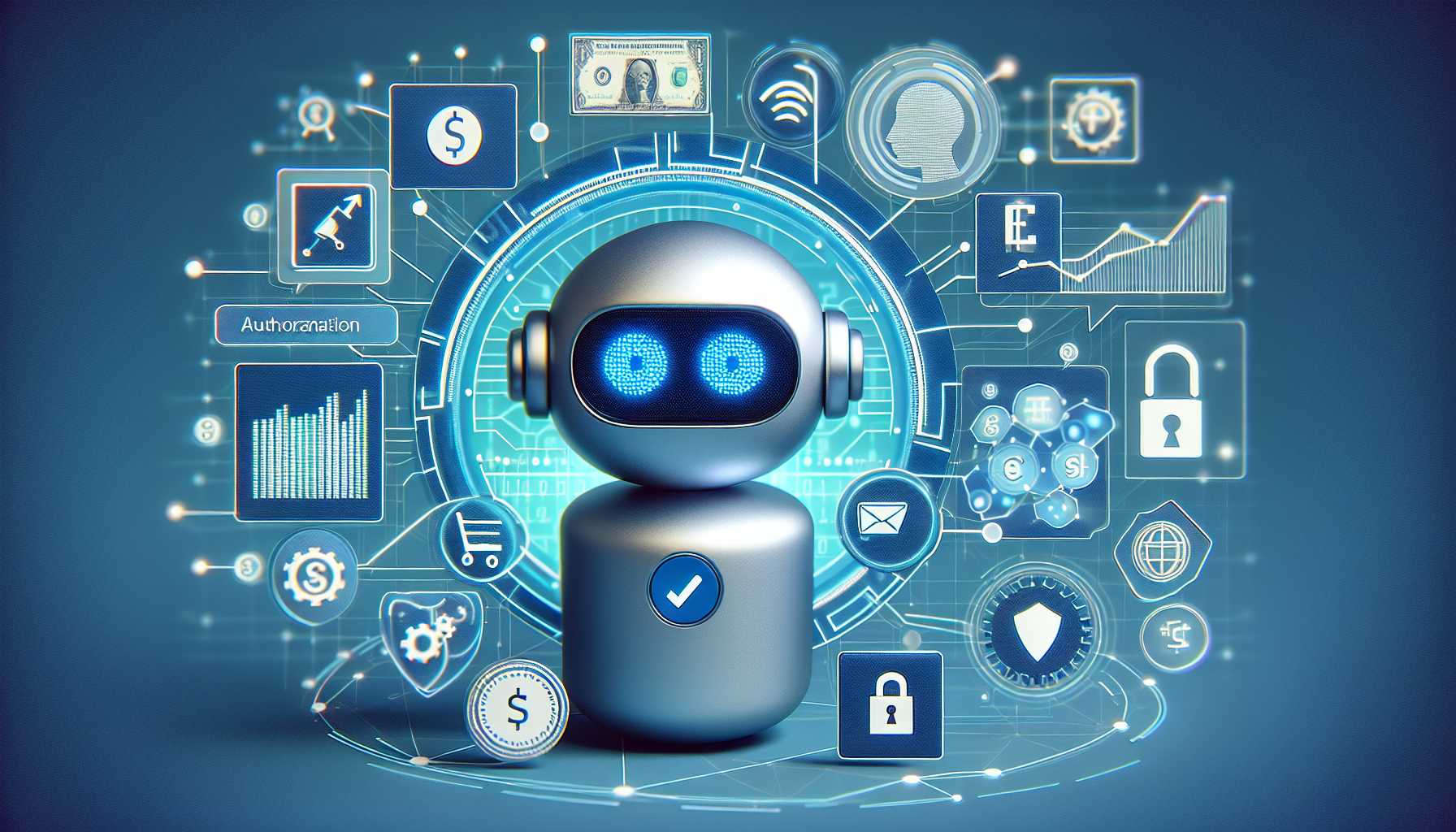
When a Chatbot Meets the Bank: Not Just Customer Service, But Identity, Permissions, and Trust
Somewhere between the endless bank queue of the past and the shiny app of today, a new player enters the game: the chatbot. No longer a generic bot that says "Hello, how can I help?" and leaves us frustrated, but a smart system that tries – at least on paper – to understand who we are, what we need, and most importantly: to make sure we are really us.
The world of banking and finance has always been conservative. Rightfully so. Money is not just another product, it's sensitive, personal, sometimes emotionally charged. And when a financial system decides to introduce a banking chatbot into this context, it's walking a very thin line between "cheap innovation" and a real revolution in service experience. And it gets interesting exactly when we reach questions of identification, permissions, security layers – and basically, who's allowed to do what.
From "Hello, I'm a Bot" to "Hello, This Is Your Account": The Paradigm Shift
If we go back a moment in time, most of us met our first chatbots on customer service websites. Basic bots that knew how to say "Please press 1 if..." and sometimes also mix Hebrew and English in a rather strange way. Today, financial chatbots can no longer afford this simplicity. When you talk to a bank's chatbot, there's an expectation that it knows how to handle intimate, precise, and sometimes urgent questions. For example: "Why did I get a double charge today?", "Can I increase my credit limit?", "Who made this transfer?".
And here the difference begins. A banking chatbot doesn't function just as an "automated response", it's actually an interface to the most sensitive part of the system: real-time financial operations. The meaning? The chatbot must know how to identify you, understand what it's allowed to reveal to you, and determine at what stage it stops and says: "That's it, from here I'm transferring you to a human, or requesting additional identification".
The Chatbot Becomes the Gatekeeper at the Entrance to Your Money
Imagine a bank branch, there's a guard at the entrance, then a reception clerk, then an investment advisor, each with a different level of access. Now imagine all of this happening in one conversation with a chatbot. Behind the scenes, the chatbot doesn't really "know everything". It operates within a system of permission layers – who it's allowed to identify, what it's allowed to tell, what it's allowed to perform.
And no less important – what it's forbidden to do. For example, answering sensitive questions without strong authentication, performing a large transfer without a one-time code (OTP), or sharing overly personal details without ensuring the user is connected from their own account and not from a foreign device.
How Does a Banking Chatbot Identify You? Not Just a Password
In the past, customer identification was quite simple – an ID card, maybe a few identifying details over the phone, and that's it. In the era of smart banking chatbots, identification becomes much more multi-layered, and not just in the technical sense. It needs to be transparent to the user, convenient, and also meet strict regulatory requirements.
Context-Based Identification: The Chatbot Knows Where You Came From
Most financial chatbots don't start the conversation from scratch. If you entered through your app, through the connected browser, or through an environment that's already been authenticated, the bot knows quite a bit about you even before you wrote the first question. This is called "contextual identification".
For example:
- Did you enter from the official app, which already requires a password or fingerprint?
- Are you connected from a known network or from a completely new device?
- Does your usage history match what you're requesting now?
For the user, this feels natural: "The chatbot already knows who I am, so why ask again?". But on the other side, there's a system dealing with the complex question: how sure are we that this is really you?
Two-Factor Authentication, Biometrics, and Natural Speech
The more sensitive the requests become, the more the chatbot raises the identification level. Let's say you started with a simple conversation: "What's my balance?". If you're already identified in the app, maybe the chatbot will agree to show you that directly. But the moment you request "Perform a transfer of 20,000 NIS", it will stop.
Here come into play:
- One-Time Code (OTP) – sent via SMS or app notification.
- Biometric Authentication – fingerprint, face recognition, depending on the device.
- Security Questions – less popular today, but still exist.
A good banking chatbot will know how to do this without breaking the experience. Not "now go to another counter and type a code", but within the conversation itself: "We sent you a code, you can type it here and we'll continue". Still not perfect, but when it works smoothly – it feels like a conversation with a human representative asking you for an ID.
Permission Layers: Not Every Request Is Equal in the System's Eyes
One of the most important concepts when talking about banking chatbots is "permission layers". Something that usually sounds too technical, but in practice it's the heart of trust. Not every operation gets the same level of trust, and not every piece of data is accessible at every stage.
First Stage: Semi-Anonymous Conversation
There are actions the chatbot can do even without fully identifying you. For example:
- Providing general information about banking products.
- Explaining interest rates, fees, loan terms.
- Technical assistance in the app (where to click to...).
Here there's no need for personal information, so the identification and permission level is relatively low. The chatbot functions almost like a smart content website, just in a conversational form.
Second Stage: Account Data – But Carefully
When moving to a financial customer service chatbot that displays account data, like balance, recent transactions, or card charges, the sensitivity level rises. Here usually authenticated login will be required – an app with a password, or at least account login on the website.
It's interesting to see that some banks choose to limit the level of detail in the chatbot. For example, it will show recent transactions but not all transfer details, or provide monthly summaries without going into every line. Why? Because it's another layer of security: even if someone "took over" the device, the immediate damage is limited.
Third Stage: Active Operations – The Stage Where the Bank Gets Nervous, and Rightfully So
The problematic – and technologically exciting – part is performing operations. The moment a banking chatbot allows transfers, credit limit changes, opening deposits, canceling cards – it's no longer just an "information interface", it's a gateway to action in the real world.
Here a series of layers come into play:
- Re-authentication check before performing operations.
- Limiting amounts for operations through the chatbot.
- Real-time alerts on every operation that went through the bot.
- "Stop" mechanisms: identifying unusual patterns and blocking the operation.
And sometimes, and this is no less important, the chatbot will simply say "no". Or direct you to a human representative, or to a branch, or to another channel. The ability to say "I can't help with this here" is a critical part of designing a secure chatbot – not everything must go through the most convenient channel.
The Trust Question: Why Should We Trust a Bot with Our Money?
People tend to forget, but trust in banking systems is built over decades. Facing a bank representative, even if we're a bit nervous, there's a face, there's a name, there's a framework. When this moves to a conversation with a chatbot – and it's a small window on the screen, without eyes and without presence – a psychological gap is created.
The Personal Experience vs. the Need to Be a "Machine"
Here comes the challenge: a banking chatbot needs to be "human" enough for us to feel comfortable asking questions, and sometimes also venting frustration ("Why did I get fees again?"). But at the same time, it must be very non-human in one sense: not to improvise with data, not to invent answers, not to "be nice" at the expense of accuracy.
In other words – we want warmth, but not at the expense of safety. A good chatbot will know to say "I'm not sure about this answer, I should transfer you to a representative", instead of throwing out a definitive guess. This mistake – of overly smart models that invent information – can be devastating in the financial world.
What Happens When the Bot Makes a Mistake?
Even bankers will quietly say: bots make mistakes. Sometimes they don't understand the user's intent, sometimes they formulate an inaccurate answer, sometimes they miss legal complexities. Therefore, most serious systems build around financial chatbots damage control mechanisms:
- Limiting the types of answers it can give (for example, not giving personal investment advice).
- Full documentation of the conversation, for future investigation.
- Quick option to transfer to a human representative with the full "conversation file".
The interesting point is that the bot doesn't really stand alone. Behind it there are security teams, lawyers, cybersecurity people, UX experts. It's an interface to the edge, but it's not "the system" itself – this is important to remember, also as users.
Israel: A Small Country, Big Chatbots
In Israel, like in almost every technological topic, things happen at a slightly different pace. The public is relatively tech-savvy, used to advanced banking apps, and at the same time very suspicious when it comes to money. The average Israeli isn't ashamed to ask "Wait, is this safe?", "Where is this stored?", "Who sees this?".
Local Banks and the Race to the Smart Chatbot
Almost every major bank in Israel already operates some kind of chatbot. Some start with basic questions, others already allow real operations: checking charges, freezing cards, questions about loans. There are even those trying to integrate an investment chatbot that explains complex products in simple language.
But here comes local regulation: Bank of Israel, Capital Market Authority, privacy protection laws. A banking chatbot in Israel can't run wild. It must comply with strict rules of information retention, storage, encryption, and even in how exactly some answers are formulated, so it won't be considered "advice" but only "information".
The Israeli Consumer: Wants Fast, But Also Wants to Talk to a Human
From my experience in conversations with banking and technology people, there's a feeling that Israelis like the idea of a chatbot – as long as there's a big button that says "human representative". They're willing to start with the bot, get quick answers, but the moment something gets a bit complicated, they want to know there's a real person on the other side who can decide.
And this is actually a good thing for financial chatbot designers: they don't need to pretend the bot can do everything. It's part of a whole service fabric, not a complete replacement for representatives. Even if in the future a large part of conversations will move to automation, there will probably always remain a certain space defined as "human only".
Is a Chatbot Our New Financial Advisor?
One of the intriguing questions is how far can – or should – we take this. If today a financial chatbot provides fairly basic information, what will happen when it integrates advanced artificial intelligence, and starts "suggesting" different account management to us: save here, reduce there, switch to another investment track?
Between General Recommendation and Personal Advice
From a technology perspective, it's almost inevitable: if the chatbot sees our spending patterns, savings, market conditions, why shouldn't it recommend to us smartly? But legally and regulatorily, that's a different story. Investment advice, for example, in Israel is a very regulated field, and not every "smart chatbot" can suddenly become a certified advisor.
Therefore, we can expect to see more guidance than advice. A bot that will say: "Did you notice you're paying high fees on this account? Maybe worth checking another track" – but will end with a sentence like "To schedule a call with an advisor, click here". That is, the bot will be the first part of the journey, not the last.
Users Learn to Speak "Bot-ese"
Another interesting phenomenon is that users themselves adapt to the chatbot. Like we once learned to speak IVR language ("For a representative, press 0"), so today we learn to formulate short, clear, almost technical questions, to get a better answer from the bot.
In a sense, there's an ongoing dialogue here: the bot learns us, we learn it. The real challenge is not to turn this into too artificial a game. A banking chatbot needs to know how to handle both a messy question, a typo, and an emotional sentence like "I'm stressed, I got a lien, what do I do?". There the intelligence is really tested – not just understanding the words, but the context.
Questions and Answers: Banking Chatbot – What's Important to Know?
Is a Banking Chatbot Really Safe to Use?
A serious bank or financial institution cannot afford an insecure chatbot. Behind the scenes there's encryption, identity management, advanced identification mechanisms and permission layers that limit what the chatbot is allowed to do at any moment. However, like any digital system, there's no 100% security – and therefore it's important to use only official channels, avoid compromised devices, and not provide codes or sensitive details to unidentified parties.
What Information Does the Chatbot See About Me?
A banking chatbot operates on top of the bank's information systems, so it "sees" what the system allows it to see at the relevant permission level. Usually it accesses only required information (Need to Know) – balance, transactions, loan details – and only from the user account you logged into. Its access is limited according to internal and regulatory policy, and conversations are usually documented for tracking and quality control.
What Is the Chatbot Allowed to Do in Terms of Account Operations?
This varies from bank to bank, but in most cases:
- Simple operations in low amounts – possible after basic identification.
- Large or complex operations – require additional authentication (one-time code, biometrics).
- Some operations – like closing an account, changing ownership, or other sensitive transactions – are usually not performed through a chatbot at all.
Can a Conversation with a Chatbot Replace a Human Representative?
In a large part of cases – yes, certainly when it comes to general information, checking charges, loan schedules, updating technical details. But a good chatbot shouldn't completely replace a human representative, especially when it comes to complex situations, financial disputes, emotional situations (liens, debts, economic crises). It should be thought of as a first line – not a complete replacement.
How Will I Know I'm Talking to an Official Chatbot and Not an Impostor?
The basic rule: connect only through the bank's official app, a secure website (https) or official channels the bank has published. Don't trust links in suspicious SMS messages or WhatsApp, and don't provide codes sent to you to a person or "bot" that comes through a random link. If in doubt – it's better to call the call center and verify.
Table: Key Differences and Challenges in Banking Chatbots
| Topic | How It Looks in Regular Service | How It Looks in a Banking Chatbot | Security and Permission Notes |
|---|---|---|---|
| Customer Identification | ID card, identification questions, human representative checks | App identification, two-factor authentication, contextual identification | Different identification layers according to operation sensitivity |
| Information Disclosure | Representative sees all data, manually filters what to tell | Partial access according to permission level and chatbot role | Minimum required information (Need to Know) |
| Performing Operations | Physical signatures, voice conversation, sometimes paperwork | Textual commands, additional authentication before execution | Limiting operation types and amounts through the chatbot |
| Error Handling | Representative apologizes, corrects, opens a ticket | Transfer to representative with full conversation documentation | Tracking and quality control on bot answer quality |
| User Experience | Waiting time, phone conversation or branch visit | Immediate conversation, 24/7, conversational language | The balance between convenience and security level |
| Regulation | Traditional procedures, forms, human oversight | Digital documentation, logs, documented permission management | Compliance with Bank of Israel guidelines and privacy laws |
Some Insights Before Introducing a Chatbot to Your Bank
For those on the development side – a bank, fintech startup, or any financial institution – the dilemma around a secure chatbot is not just technological. It's a combination of service culture, legal responsibility, and ability to stand before a customer who expects everything to work "like WhatsApp", just without any mistakes.
Good Technology Is Only Half the Solution
You can build an amazing chatbot in terms of NLP, understand spoken Hebrew, even subtle humor. But if you don't properly plan the permission layers, the identification mechanisms, the brakes – it could become a dangerous failure point. The bot needs to know not just how to answer, but also to stop, transfer forward, and sometimes simply say "I can't perform this here".
Transparency to the User: Let Them Understand What's Happening Here
Another thing still missing in many systems: explaining to the user, in simple language, what the bot is doing right now and why it's requesting additional identification. "I see you're requesting to perform a high-amount transfer, and therefore I need to verify it's really you" – a small sentence like this can turn a moment of suspicion into a moment of understanding.
When a banking chatbot speaks to us as partners, not as "users who need to obey", the trust level rises. And this trust is no less important than encryption and protocols.
And Finally: A Chatbot Is a Tool, Not a Goal
It's easy to be tempted to think that every bank must today "implement a chatbot" to look innovative. But this tool, like any technological tool, needs to serve a clear purpose: better service, more accessible, safer. Not to forcefully replace humans, but to allow us – as customers – to get quick answers on simple matters, and free up human time for things that really require conversation, listening, judgment.
If done right, a banking chatbot can be not just "another window on the side of the website", but an intelligent gateway to our private financial world – one that understands who we are, respects boundaries, and stands guard when needed.
And if you're in a financial organization considering introducing or upgrading a chatbot, it's worth doing it with professional guidance – people who understand both technology, regulation, and the Israeli customer's mindset. We'd be happy to help with an initial consultation at no cost, to ensure your chatbot will be not just smart and cool, but also safe, responsible – and most importantly, truly useful.